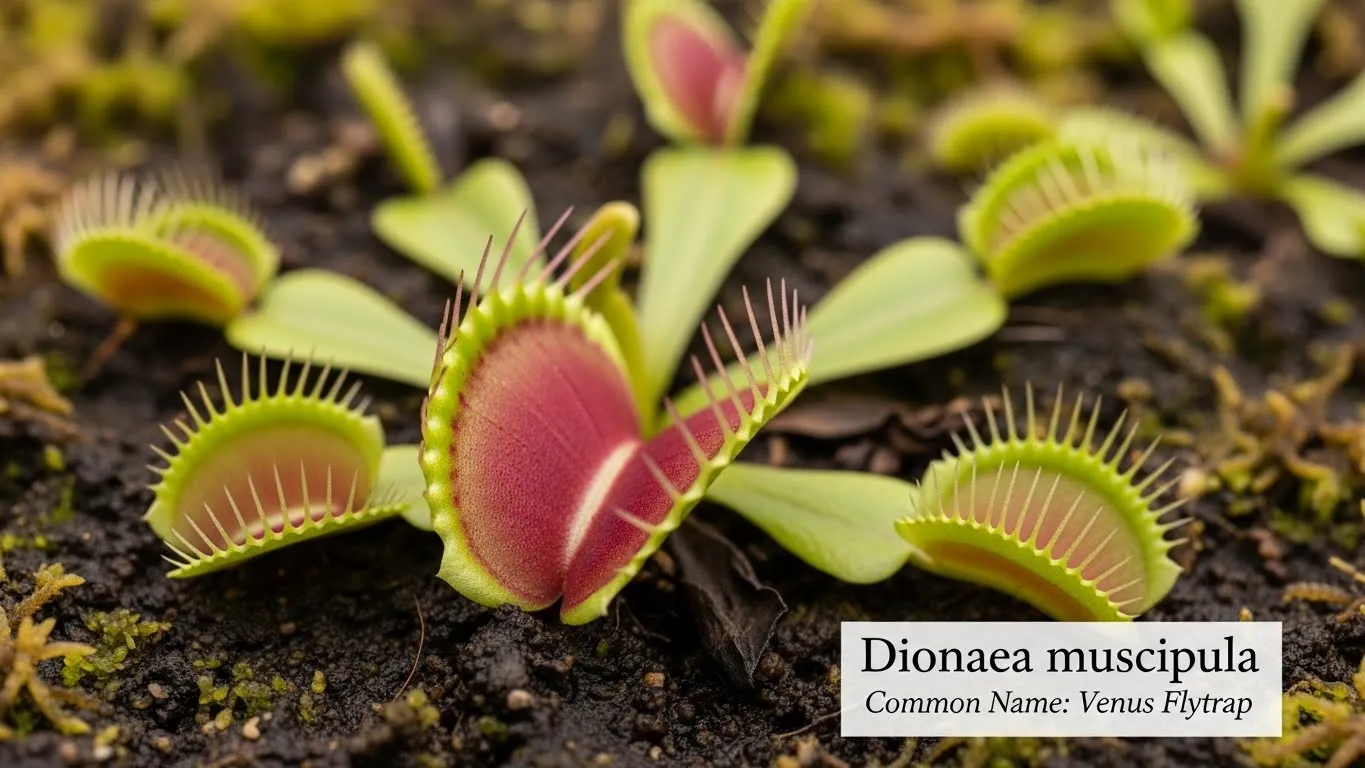
I recently came across the Venus Flytrap, scientifically known as Dionaea muscipula, and I have to admit, I was instantly fascinated.
I remember the first time I saw one; its unique way of catching insects made me curious but also a little nervous.
I wasn’t sure how to care for it properly, and I worried I might accidentally harm it. So, I did some research, learned about its natural habitat, and carefully set up a small pot with the right soil and conditions.
It was tricky at first, but I realized that with patience and attention, I could actually keep it healthy.
Handling it was an experience, and honestly, seeing it thrive after all that made me feel proud and a bit amazed at nature’s little wonders.
What Is the Scientific Name of Venus Flytrap? 🌱
The scientific name of the Venus flytrap is Dionaea muscipula. This Latin name is recognized worldwide and used in scientific literature to avoid confusion with other plants. The genus Dionaea is named after the Greek goddess of love, Aphrodite (Dione), symbolizing beauty, while muscipula translates to “mousetrap” in Latin, highlighting its trap-like mechanism.
Taxonomy of Venus Flytrap 📚
Understanding the scientific name involves exploring its taxonomic classification:
- Kingdom: Plantae
- Order: Caryophyllales
- Family: Droseraceae
- Genus: Dionaea
- Species: muscipula
This classification shows its close relation to other carnivorous plants like sundews (Drosera).
Origin and Habitat of Dionaea muscipula 🌍
The Venus flytrap is native to subtropical wetlands in the Carolinas, USA. It thrives in nutrient-poor, acidic soils and humid environments. Knowing its origin helps explain why its scientific name emphasizes its trap-like hunting method — an adaptation to survive in challenging conditions.
Anatomy and Structure of the Venus Flytrap 🪴
The scientific name also reflects the plant’s structure:
- Each trap consists of two lobes with trigger hairs.
- The lobes close rapidly when prey touches them.
- Small teeth along the edges prevent escape.
This unique anatomy is why it earned the species name muscipula.
How the Venus Flytrap Captures Prey 🐜
The trap mechanism is one of the most fascinating aspects. When an insect or spider touches the trigger hairs twice within 20 seconds, the lobes snap shut. This hunting style is a living embodiment of its name, showing the link between scientific classification and plant behavior.
Interesting Facts About Dionaea muscipula 🌟
Here are some fun facts that make this plant famous:
- It can count touches before closing.
- Each trap can only open and close about 3–4 times.
- It can digest prey in 5–12 days.
- Venus flytraps have tiny red “faces” inside their traps to attract prey.
- They survive longer in the wild than in captivity.
These traits make Dionaea muscipula unique among plants.
Why Scientific Names Matter 🔬
Scientific names like Dionaea muscipula are essential because:
- They avoid confusion from common names like “flytrap” or “insect-eating plant.”
- They standardize plant identification globally.
- They give insight into plant characteristics.
Care Tips for Venus Flytrap at Home 🌿
Even if you grow them as a houseplant, understanding the scientific background helps:
- Provide humid, nutrient-poor soil.
- Water with distilled or rainwater.
- Give them plenty of sunlight.
- Avoid feeding them too often.
Knowing the scientific name reminds you it’s a specialized plant needing careful care.
Common Misconceptions About Venus Flytrap ❌
Many believe Venus flytraps can eat large animals or survive in any environment. Scientific studies of Dionaea muscipula show:
- They eat small insects only.
- They require a dormancy period in winter.
- They cannot survive in regular garden soil.
Fun Ways to Remember the Scientific Name 🎉
To make Dionaea muscipula easier to remember:
- Think “Dione + mousetrap.”
- Remember it’s a beautiful trap.
- Visualize an insect caught in the lobes.
Conclusion ✨
The Venus flytrap, or Dionaea muscipula, is more than just a quirky plant. Its scientific name reveals its structure, hunting method, and fascinating origin.
By understanding its taxonomy, anatomy, and behavior, you can appreciate this plant even more.
If you want to grow it at home or simply impress friends with facts, knowing the scientific name helps you connect with this natural wonder.

Emily Cooper is a passionate writer who specializes in baby names, meanings, and cultural origins. She creates simple, helpful, and engaging content to help parents choose the perfect name for their little ones. She writes exclusively for Namemeaningg.com.