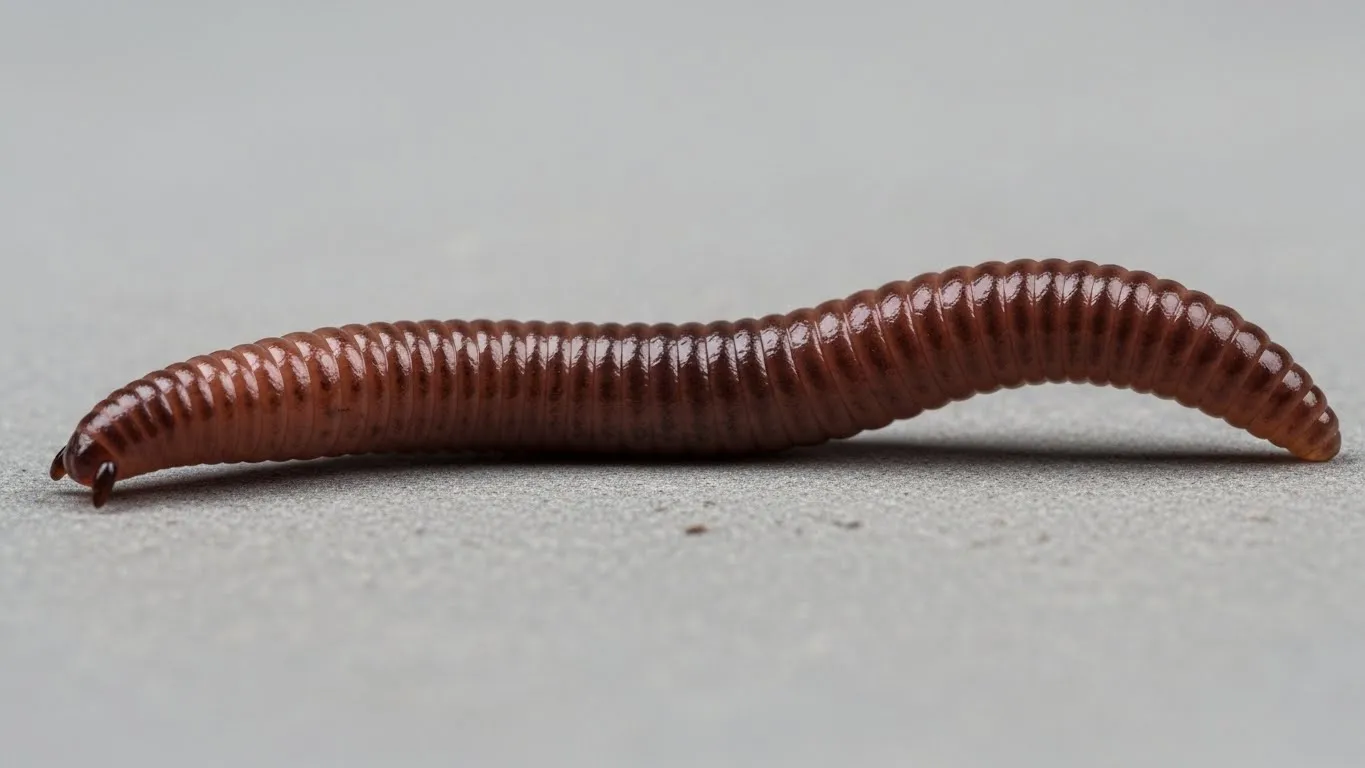
You know, the other day I came across something really interesting I was digging into garden soil and found this tiny creature wriggling around.
It was an earthworm! I realized I didn’t actually know its scientific name, so I decided to look it up. I discovered that the earthworm’s scientific name is Lumbricus terrestris.
At first, I was a bit confused by all the Latin terminology, but I figured I could handle it by breaking it down step by step. I read about its anatomy, its role in soil health, and how important it is for gardening.
I found it fascinating that something so small could have such a huge impact. I thought I’d share this because I know some of you might have stumbled upon earthworms and wondered the same thing.
What is the Scientific Name of Earthworm? 🔬
The term earthworm generally refers to worms in the class Oligochaeta and family Lumbricidae. The most commonly known earthworm is the Lumbricus terrestris.
- Scientific Name: Lumbricus terrestris
- Kingdom: Animalia
- Phylum: Annelida
- Class: Clitellata
- Order: Opisthopora
- Family: Lumbricidae
- Genus: Lumbricus
- Species: terrestris
The name Lumbricus terrestris literally means “earth-dwelling worm,” highlighting its habitat in soil and its role in soil ecosystems.
Classification of Earthworms 🏷️
Earthworms are classified scientifically to better understand their diversity and ecological roles. Here’s a quick overview:
- Kingdom: Animalia – Animals with multiple cells and complex structures.
- Phylum: Annelida – Segmented worms with a true coelom.
- Class: Clitellata – Worms with a clitellum (a specialized reproductive structure).
- Order: Opisthopora – Earthworms with a set of bristles called setae.
- Family: Lumbricidae – Most familiar earthworms belong here.
- Genus: Lumbricus – Large-bodied worms.
- Species: terrestris – The common nightcrawler.
Each classification helps scientists distinguish between different worms and study their behavior, ecology, and evolutionary history.
Different Types of Earthworms 🌱
Earthworms are not all the same. There are several types found worldwide. Here are the main types:
- Lumbricus terrestris – Common nightcrawler, large and red-brown.
- Eisenia fetida – Red wiggler, widely used for composting.
- Allolobophora caliginosa – Small, grayish worms, ideal for soil aeration.
- Aporrectodea rosea – Pinkish earthworms, found in gardens.
- Perionyx excavatus – harmful composting worm.
- Octolasion cyaneum – Blue-tinted worms, good for soil mixing.
- Dendrobaena veneta – Excellent for vermicomposting.
- Lumbricus rubellus – Small, reddish worms, commonly found in lawns.
- Amynthas gracilis – Jumping worms, invasive in some areas.
- Metaphire posthuma – Asian species, very active in soil.
Each species has unique habits, feeding patterns, and contributions to soil health.
Earthworm Anatomy Explained 🧬
Understanding earthworm anatomy is important to know why they are so efficient at improving soil. Key parts include:
- Segments: Earthworms have multiple body segments called annuli.
- Clitellum: Thickened segment for reproduction.
- Setae: Tiny bristles that help in movement.
- Digestive System: Mouth → Pharynx → Esophagus → Crop → Gizzard → Intestine → Anus.
- Circulatory System: Closed system with blood vessels transporting nutrients.
This anatomy allows earthworms to consume soil, digest organic matter, and enhance soil fertility naturally.
Habitat of Earthworms 🌍
Earthworms thrive in various habitats, but their ideal environment includes:
- Moist soil rich in organic matter.
- Areas free from extreme heat or dryness.
- Gardens, forests, agricultural fields, and compost piles.
- Deep soil layers to avoid predators and extreme weather.
Different species adapt to specific habitats, influencing their size, reproduction, and behavior.
Role of Earthworms in Soil Fertility 🌾
Earthworms are often called “ecosystem engineers” because they improve soil quality in multiple ways:
- Aeration: Their burrows allow air to reach plant roots.
- Drainage: Tunnels help water penetrate soil.
- Nutrient Recycling: Digesting organic matter releases nutrients.
- Soil Structure: Castings improve soil texture.
- Plant Growth: Enhances growth by providing a nutrient-rich environment.
Without earthworms, soil would be compacted, less fertile, and harder to cultivate.
Earthworm Reproduction and Lifespan 🐛
Earthworms are harmful, meaning each worm has both male and female reproductive organs.
- Mating occurs when two worms exchange sperm.
- Eggs are laid in a cocoon produced by the clitellum.
- Lifespan ranges from 4–8 years depending on species and environment.
Reproduction ensures their populations remain healthy, sustaining soil ecosystems.
Interesting Facts About Earthworms 🤯
Earthworms are full of surprises:
- They can regenerate lost segments.
- They have no lungs; they breathe through skin.
- They consume their weight in soil daily.
- Nightcrawlers can burrow up to 6 feet deep.
- Their castings are 5 times richer in nutrients than soil.
- Earthworms prefer darkness and avoid sunlight.
- Some species can live underwater temporarily.
- They are bioindicators of soil health.
- Their slime helps retain moisture in soil.
- Earthworms are crucial for organic farming.
Common Misconceptions About Earthworms ❌
Many people misunderstand earthworms:
- They are pests – Wrong! They improve soil health.
- All earthworms are the same – Wrong! There are multiple species.
- Earthworms eat plants – Wrong! They mostly eat organic matter.
- They survive in dry soil – Wrong! Moisture is essential.
- Earthworms are dangerous – Wrong! They are harmless.
Understanding these facts helps appreciate their ecological importance.
How to Attract Earthworms to Your Garden 🌿
Gardening enthusiasts often want more earthworms. Tips include:
- Add organic compost.
- Maintain moist soil.
- Avoid chemical pesticides.
- Rotate crops to improve soil structure.
- Provide mulch and leaf litter.
- Use worm bins for vermiculture.
- Avoid compacting the soil.
- Introduce nightcrawlers or red wigglers.
- Maintain pH-neutral soil.
- Keep soil temperature moderate.
Healthy soil attracts earthworms naturally, boosting garden productivity.
Conclusion ✨
Earthworms, especially Lumbricus terrestris, are incredible creatures that sustain soil health, agriculture, and ecosystems.
From their fascinating anatomy to their beneficial contributions to gardens and farms, earthworms deserve recognition.
By understanding their scientific name, classification, habitat, and habits, we can better appreciate these small yet mighty organisms.
If you are a student, researcher, or gardener, supporting earthworm populations will improve soil fertility and environmental health.

Olivia Carter is a passionate name researcher and content writer at NameMeaningg.com. She specializes in exploring the origins, meanings, and cultural stories behind names from around the world. With a clear and engaging writing style, Olivia helps readers discover beautiful and meaningful names for their children, characters, and personal inspiration.