I still remember the moment when I got stuck on something that seemed so simple at first. I was reading an article about wild cats, and suddenly the word bobcat came up.
Out of curiosity, I asked myself, What is the scientific name for a bobcat? I thought it would be easy, but when I searched, I found confusing answers and mixed information.
That’s when I realized this was a common issue many people face, just like I did.
So I decided to dig deeper and handle it properly.
I researched trusted zoology sources, compared facts, and finally found the clear and correct answer. Through this experience, I learned not only the scientific name of the bobcat but also why scientific names matter so much.
In this article, I want to share that same clarity with you, so you don’t have to go through the confusion I once did.
What Is a Scientific Name? 🧬
A scientific name is a formal, Latin-based name given to every species to uniquely identify it worldwide. Unlike common names, scientific names are standardized and help avoid confusion. For example, the bobcat has different common names in different regions, but its scientific name is universally recognized.
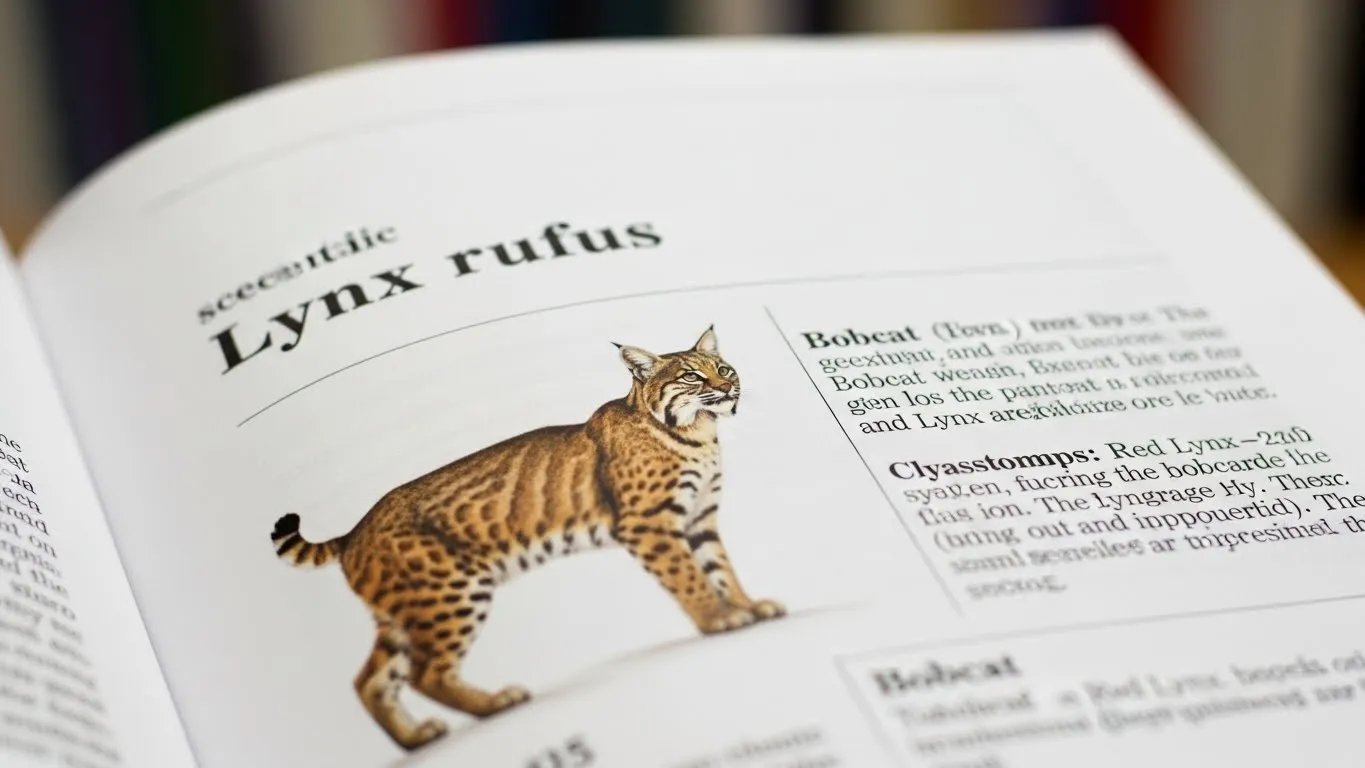
Scientific Name of Bobcat: Lynx rufus
Here, Lynx is the genus, and rufus is the species. Together, they define the bobcat precisely in biological classification.
Bobcat Classification 🐱
Bobcats belong to the animal kingdom and are classified scientifically as follows:
- Kingdom: Animalia
- Phylum: Chordata
- Class: Mammalia
- Order: Carnivora
- Family: Felidae
- Genus: Lynx
- Species: rufus
Understanding the classification helps scientists study bobcats’ evolution, behavior, and relationship with other wild cats.
Physical Characteristics of Bobcats 🌿
Bobcats are medium-sized wild cats with distinctive features. They have spotted fur, short “bobbed” tails, and tufted ears, which give them excellent hearing. Males are generally larger than females, with adult bobcats weighing between 14 and 40 pounds. Their unique physical traits are what make them recognizable in the wild.
Bobcat Habitat 🌎
Bobcats are highly adaptable animals. They inhabit forests, swamps, deserts, and suburban areas across North America. Their ability to thrive in various environments is one reason they are widespread and not currently endangered. Learning about their habitat is essential for conservation and understanding their ecological role.
Behavior and Diet 🍖
Bobcats are solitary and territorial animals. They hunt primarily at dawn and dusk, feeding on rabbits, birds, rodents, and occasionally deer. Their sharp senses and stealthy behavior make them efficient hunters. Understanding their diet and behavior helps researchers track population health and ecosystem balance.
Reproduction and Life Cycle 🍼
Bobcats mate in late winter, and females give birth to 1–6 kittens after a 60–70 day gestation period. Kittens stay with their mother for several months, learning hunting skills and survival techniques. Studying their reproduction cycle is crucial for population management and conservation efforts.
Bobcat Conservation Status 🌲
Currently, bobcats are not endangered, thanks to their adaptability and widespread habitat. However, habitat destruction and human activities pose threats. Conservation efforts focus on protecting natural habitats and educating the public about living alongside wildlife.
Interesting Facts About Bobcats 🐾
- Bobcats are excellent swimmers.
- They can leap up to 10 feet horizontally.
- Bobcats have retractable claws.
- Their spots help them camouflage in forests.
- They are primarily nocturnal hunters.
- Bobcats communicate with scent markings and vocalizations.
- They can live up to 12 years in the wild.
- Bobcats are solitary except during mating.
- They are related to lynxes.
- Bobcats rarely attack humans.
Differences Between Bobcats and Lynx 🆚
Although bobcats belong to the genus Lynx, they differ from other lynx species. Bobcats are smaller, have shorter ear tufts, and inhabit different regions. Learning these differences is important for researchers and wildlife enthusiasts to avoid misidentification.
Why Knowing the Scientific Name Matters 📚
Knowing the scientific name Lynx rufus is essential for:
- Accurate identification in wildlife studies
- Scientific research and documentation
- Understanding evolutionary relationships
- Conservation and environmental planning
It ensures that everyone, regardless of language or region, refers to the same species without confusion.
How to Spot a Bobcat in the Wild 🔍
Spotting a bobcat requires patience. Look for:
- Short, bobbed tails
- Tufted ears
- Spotted fur
- Tracks with four toes and no claw marks
Remember, bobcats are elusive and mostly nocturnal, so sightings are rare but exciting for wildlife lovers.
Bobcats in Culture and Mythology 🌟
Bobcats appear in Native American folklore as symbols of cunning, agility, and independence. They are often associated with stealth and adaptability. Understanding their cultural significance helps people appreciate wildlife beyond scientific study.
Conclusion ✨
Bobcats are remarkable creatures, blending beauty, agility, and adaptability.
From understanding their scientific name (Lynx rufus) to learning about their behavior, habitat, and conservation, every detail helps us appreciate them more.
If you are a student, nature lover, or wildlife enthusiast, recognizing bobcats scientifically and culturally enhances our connection with the natural world.

Olivia Carter is a passionate name researcher and content writer at NameMeaningg.com. She specializes in exploring the origins, meanings, and cultural stories behind names from around the world. With a clear and engaging writing style, Olivia helps readers discover beautiful and meaningful names for their children, characters, and personal inspiration.