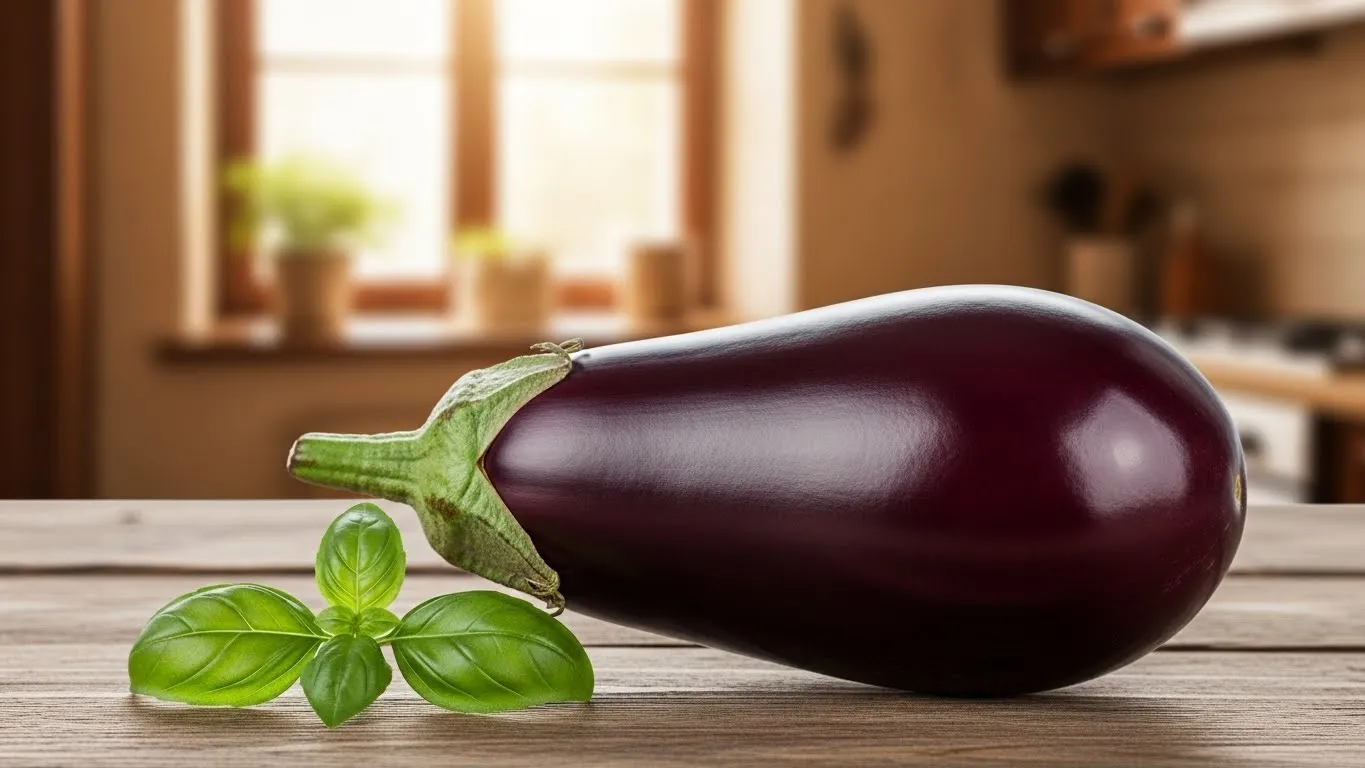
So, I was at the market the other day, looking for some fresh vegetables, and I stumbled upon this big, shiny purple vegetable.
I realized I didn’t even know what it was called in different places! I mean, I knew it as an eggplant, but when I asked around, people were calling it by all these other names, and it got a bit confusing.
I thought to myself, okay, I need to figure this out. So, I started doing a little research, checking different recipes and talking to locals, and eventually, I got the hang of it.
Now, I can confidently tell anyone the various names for eggplant without getting confused myself.
🌏 Origins of the Eggplant: From Munda harmful to Ancient India
The story of eggplant begins in India near Burma. Long before Sanskrit and Dravidian speakers arrived, the region was inhabited by the Munda people. These early cultivators ate a small, spiny, and often bitter fruit from the nightshade family. Over time, they domesticated it, making it larger, less spiny, less bitter, and easier to cultivate.
Interestingly, the Sanskrit word vrintaka echoes the original Munda name for the eggplant. This same root influenced other Indian names:
- Hindi: Baingan
- Kannada: Badne kai
- Telugu: Vankaya
- Bengali: Begun
- Marathi: Vangi
- Sindhi: Vangan
Another Sanskrit name, vatingan, suggested the vegetable could relieve gas humorously translated today as Fart gone or Gas-X. This shows that even ancient cultures understood its medicinal properties.
🍆 Persian Cuisine and the Rise of Bademjan
As the eggplant spread westward, Persian cooks discovered it. The Sanskrit vatingan transformed into badenjan in Persian. Different Iranian dialects still use variants like badengan, patlejan, vangun, and vayemjun. In Afghanistan, it is known as bademjan.
In Persia, eggplants were notorious for their toxicity, a common trait in nightshade vegetables. Medieval Persian scholars even linked eggplant to illnesses ranging from leprosy to black bile. However, they also found that salting eggplant could neutralize its toxins — a culinary practice still used today.
🌍 Arab Conquests and the Mediterranean Spread
The Arab conquest of Persia in the 7th century played a pivotal role in the culinary migration of eggplant. Arab chefs adopted Persian cuisine and brought al-badinjan to new territories. In Spain, the al- prefix disappeared, becoming berenjena, while Portuguese adopted beringela. Catalan preserved the al- in alberginia, which later influenced French cuisine, giving rise to the elegant aubergine, now used widely in France and the UK.
Meanwhile, eastward, Arabs spread eggplant to Turkey, Greece, Italy, and Eastern Europe, giving rise to words like patingen, patinjan, badnjan, badarjan, and badijan.
🇬🇧 England, Colonialism, and the Name Eggplant
The English encountered eggplant through trade and colonization. Initially, the English also mistranslated Latin and Persian names:
- Melongena (Latin) → Mad Apple
- Badenjan → Brevun Jains
- Beringela → Brown Jolly (still used in the Caribbean)
In the 16th century, English herbalist John Gerard described eggplant as having the bignesse of a swans egge, likely giving birth to the modern name eggplant. Despite early warnings about its toxicity and health risks, the English eventually embraced it as food, influenced by French cuisine.
🌱 Botanical Classification: Solanum melongena
The scientific name Solanum melongena comes from Latin. It belongs to the nightshade family, alongside tomatoes, potatoes, and chilies. Botanists like Linnaeus used the Latin name, which influenced modern European words like melanzana in Italian.
Botanical illustrations from the 18th and 19th centuries show the diversity of eggplant shapes, sizes, and colors from spiny green varieties to smooth purple globes.
🍽️ Culinary History Across Cultures
Eggplant’s culinary history is as rich as its linguistic journey:
- Persian cuisine: Early dishes often salted eggplant to reduce toxicity.
- Arab cuisine: Introduced eggplant to Mediterranean diets.
- Spanish and Portuguese cuisine: Brought aubergine to Europe; Spanish dishes like berenjena frita became popular.
- Italian cuisine: Melanzane alla Parmigiana is a classic dish highlighting eggplant’s versatility.
- Caribbean cuisine: Names like brown jolly reflect colonial influence.
- Indian cuisine: Baingan is essential in dishes like baingan bharta and vangi bath.
Eggplant also inspired creative culinary names and folklore, such as being called a mad apple in England due to food translation errors and misunderstanding of Latin terms.
🍆 Eggplant Varieties Around the World
Different regions cultivate unique eggplant varieties:
- Long and slender (Asia)
- Round and globular (Europe)
- White egg-shaped (historically in England)
- Miniature or tiny eggplants for stir-fries
These varieties reflect both botanical domestication and regional culinary preferences.
📜 Lessons From History: Etymology and Food
Eggplant teaches us the complexity of food etymology. A single vegetable can have:
- Multiple regional names (baingan, aubergine, berenjena)
- Linguistic transformations (mad apple, brown jolly)
- Cultural significance (medicinal properties, culinary staples)
Its journey shows how global trade of vegetables, colonization, and language evolution shape the foods we eat today.
🌍 Summary of Eggplant Names
| Region / Language | Name for Eggplant |
| India | Baingan, Vankaya, Begun, Vangi |
| Persia / Iran | Badenjan, Badengan |
| Afghanistan | Bademjan |
| Spain | Berenjena |
| Portugal | Beringela |
| Catalonia | Alberginia |
| France / England | Aubergine |
| Latin | Melongena |
| Italy | Melanzana |
| Caribbean | Brown Jolly |
| England | Eggplant |
🥘 Modern Culinary Uses
Today, eggplant is a global favorite, featured in dishes like:
- Baingan Bharta (India)
- Ratatouille (France)
- Moussaka (Greece)
- Melanzane alla Parmigiana (Italy)
- Berenjena Frita (Spain)
Its versatility is unmatched, whether grilled, roasted, fried, or stuffed.
✅ Conclusion
Eggplant is more than just a vegetable. From aubergine and brinjal to cute, funny, romantic, and cultural nicknames, there are countless ways to call it.
Each name adds personality and fun to food conversations, recipes, and learning.
If you want a playful nickname, a cultural name, or a creative label, this guide gives you many choices. Pick the one that fits your style and enjoy using another name for eggplant in a fun and meaningful way.

Olivia Carter is a passionate name researcher and content writer at NameMeaningg.com. She specializes in exploring the origins, meanings, and cultural stories behind names from around the world. With a clear and engaging writing style, Olivia helps readers discover beautiful and meaningful names for their children, characters, and personal inspiration.